
HOAR FROST
Vapour straight to ice
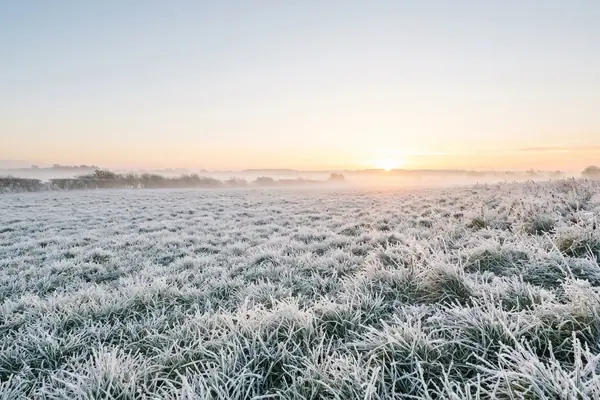
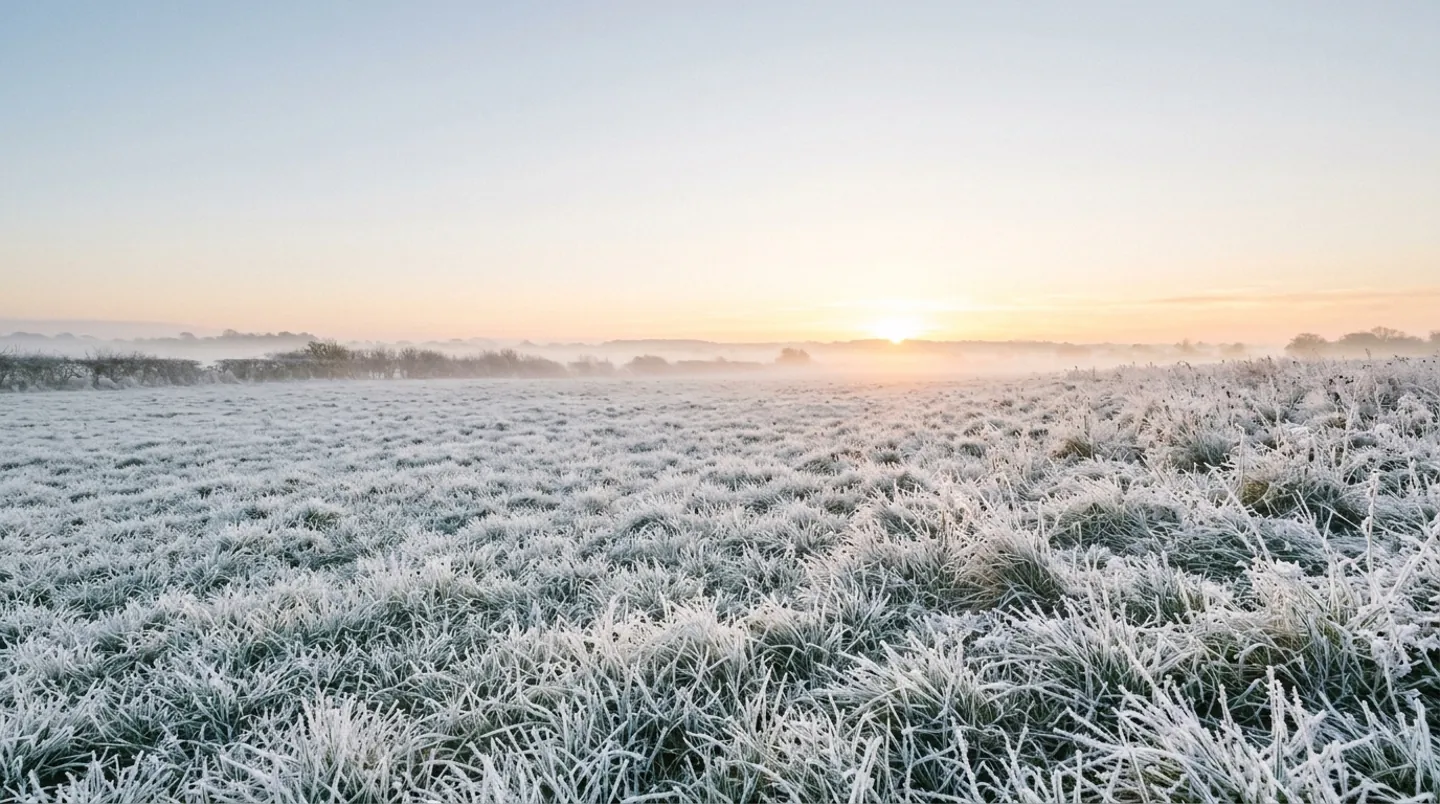
The Met Office says hoar frost forms by the same process as dew, but on a surface below freezing. It is the white frost on grass and cars.
Check tonightAN INFORMATIONAL GUIDE: FROST CRYSTAL LORE
Frost is a clear-night story.
On a still, cloudless night the grass, the car roof and the twigs lose heat to the sky and cool the air above them. The Met Office explains why that can leave a white frost even when the forecast says it stayed above zero.
CLEAR & CALM means frost risk
THE SHORT ANSWER
Frost grows from water vapour.
Rime and glaze come from droplets that freeze.
HOAR FROST
The Met Office says hoar frost forms by the same process as dew, but on a surface below freezing. It is the white frost on grass and cars.
Check tonightRIME
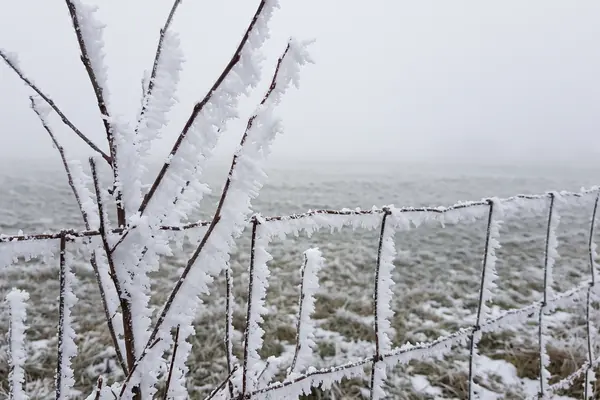
Rime is a rough white deposit that builds on surfaces facing the wind, when supercooled fog droplets freeze as they drift past.
Rime and glazeGROUND OR AIR
A ground frost means a surface is below 0°C. An air frost means the air, measured at least a metre up, is below 0°C.
See the numbersA QUICK FROST CHECK
Pick the kind of night the forecast describes. The bar shows how likely the Met Office's rule of thumb makes a white frost on the grass and the car.
Based on the Met Office guide to frost and ice. Local spots such as hollows and open grass can be colder than the forecast suggests.
TWO NUMBERS WORTH KNOWING
Days of air frost across the UK as a whole,
from the Met Office series that starts in 1931.
93.4 days
UK days of air frost in 2010
The Met Office's UK series counts days with a minimum air temperature below zero. 2010 has the highest yearly figure from 1931 to 2025, with 24.0 days in December alone.
MOST FROSTY · 2010
31.7 days
UK days of air frost in 2014
The lowest yearly figure from 1931 to 2025 came only four years later. For comparison, the series shows 36.0 days in 2024 and 44.6 days in 2025.
LEAST FROSTY · 2014
Source: Met Office National Climate Information Centre, UK areal series of days of air frost from HadUK-Grid 1 km data (updated 1 October 2026). The figures are averages across the UK, so a cold valley sees far more.
FOUR THINGS TO NOTICE
Frost forms unevenly, and the pattern tells you how the night went. These come from the Met Office, the RHS and the American Meteorological Society.
The Met Office says grass loses heat faster than tarmac, so a grass frost can form when roads and paths stay clear.
A car's thermometer reads the air. The roof and windscreen can drop a few degrees lower on a clear night and frost over above 0°C.
The RHS says cold air sinks and flows downhill on frosty nights, collecting in dips and hollows known as frost pockets.
Glaze is clear ice that can be mistaken for a wet surface. On roads and paths it is called black ice, and the Met Office calls it highly dangerous.
RIME AND GLAZE

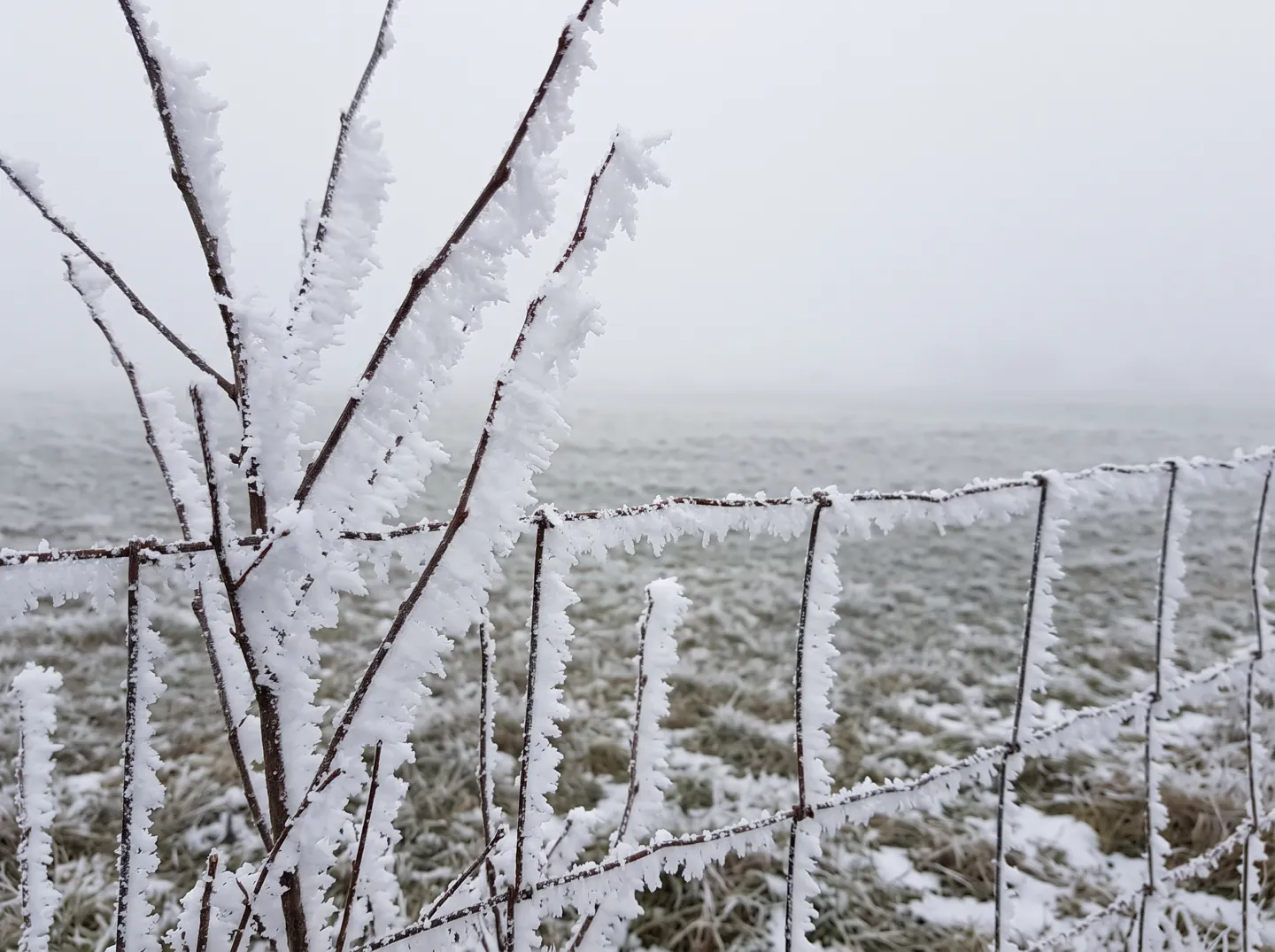
Rime grows when supercooled droplets in fog freeze on whatever they touch, so it builds into the wind on fences, twigs and wires. The US National Weather Service describes it as an opaque coating of tiny white granular ice.
Glaze forms when supercooled rain or drizzle meets the ground, or when ordinary rain falls on a surface well below 0°C. The Met Office says its weight can bring down branches and, more rarely, telephone lines.
Questions
A ground frost means the ground or objects on it have fallen below the freezing point of water. An air frost means the air, usually measured at least one metre above the ground, is below freezing. The Met Office says ground frosts are common even when the air stays above 0°C.
Forecast overnight temperatures are air temperatures. The Met Office explains that surfaces such as a metal car roof cool first on a clear night and can end up a few degrees colder than the air, so frost can form above 0°C.
The Met Office says feathery hoar frost forms when a surface reaches freezing point before any dew forms, so vapour turns straight to ice crystals. If dew forms first and then freezes, the result is a more globular white frost.
No. Frost grows from water vapour, while rime forms when supercooled fog droplets freeze on contact with a surface they drift past. That is why rime builds up on the windward side of fences, twigs and wires.
Cold air sinks and flows downhill on frosty nights. The RHS says it collects in dips and hollows called frost pockets, and can pool behind hedges or fences across a slope. Gaps in the barrier can let it drain away.
Sources
ABOUT THIS NAME
thefcl.net is part of the DoodleSale portfolio. It isn't in an auction right now, but you can ask about leasing it.